.png)
Statement on the Anti-Trans and Anti-Intersex EHRC Code of Practice in the United Kingdom
June 20, 2026
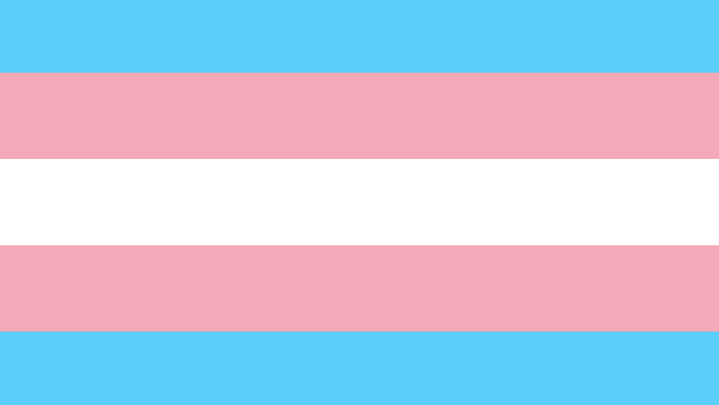
The Lemkin Institute for Genocide Prevention and Human Security condemns the Equality and Human Rights Commission’s (EHRC) updated Code of Practice for services, public functions, and associations presented to the UK Parliament on 21 May 2026. This Code of Practice is emblematic of the increasingly hostile environment in the UK for the trans and intersex communities. In its attempt to erase trans and intersex people from public life, this document is genocidal in nature.
The new Code of Practice follows 13 months after the UK Supreme Court’s (UKSC) 2025 decision in For Women Scotland, which the Lemkin Institute denounced as part of a genocidal process last summer in our Red Flag Alert on Anti-Trans and Intersex Rights in the UK. In that decision, the UKSC found that, for the purposes of the Equality Act, 2010, “sex” referred exclusively to “biological sex.” As we previously pointed out, the decision failed to provide any definition, let alone a cogent one, of “biological sex.” For Women Scotland has the effect of preventing trans people from claiming sex discrimination under UK equality law on the basis of their lived sex or gender.
Although the decision itself claimed that it “would not have the effect of disadvantaging or removing important protection [...] from trans people,” it also found that single-sex spaces could be created which are provided solely on the basis of “biological sex.” As the gender critical movement has broadened the discussion of single-sex spaces under the Equality Act, 2010 to include toilets, this doctrine has been extended to the provision of toilets in all public spaces.
The EHRC regulates the Equality Act, 2010 and thus provides guidance to organisations, service providers, and employers for compliance with this piece of legislation. Whereas EHRC guidance is not legally binding, it must be considered by a court or tribunal when making a decision on a discrimination claim. Following For Women Scotland, the EHRC was tasked with updating its guidance on sex discrimination to provide standards for everyone to follow. The EHRC was not required to make its guidance as trans exclusionary as possible, though that is what it did.
The Lemkin Institute already condemned the initial interim guidance provided by the EHRC on 25 April 2025, just nine days following the For Women Scotland decision. Most problematically, that initial guidance appeared to declare that organizations are not only permitted to exclude trans people from single-sex spaces that align with their lived gender or sex identity, but they are required to do so.
The Good Law Project submitted a challenge to this draft guidance, arguing that the draft guidance did indeed require trans exclusion and that this was discriminatory. This reading – that the draft guidance required trans exclusion from single-sex spaces – was the reading of most organizations, both pro-trans and trans exclusionary ones. In February, the High Court ruled that this reading misinterpreted the draft guidance. Rather, the High Court found that the draft guidance did not require services to provide single-sex bathrooms at the exclusion of trans people, and that excluding trans people from bathrooms might constitute discrimination on the basis of gender recognition, a different ground of discrimination than sex discrimination.
While this decision appears positive on its face, an adoption of such guidance following this decision would not prevent further harmful “misinterpretations” of it, as the Good Law Project already pointed out. It is these “misinterpretations” of the draft guidance which stoked fear within the trans community and already resulted in direct harm to trans people. The draft guidance was followed by an increase in harassment and violent threats against trans and intersex people in toilets across the country.
Unfortunately, the Code of Practice presented to the House of Commons on 21 May 2026 undid the positives from this High Court decision. The EHRC made changes to the previous drafts of the guidance in order to further cement a preference for single-sex spaces at the exclusion of trans people. It did this in spite of the High Court’s finding that excluding trans people from such spaces could constitute discrimination and in spite of the guarantee in For Women Scotland that the decision would not strip trans people of any protection.
The Lemkin Institute cannot read the new EHRC guidance as anything other than an attempt to make life harder for the trans and intersex communities in the UK and to erase them from public life as much as possible. There are also several instances where the Code of Practice tends towards the forced outing of trans people who dare to exist in public spaces, which is incredibly harmful and puts trans and intersex people at risk of violent assault.
The guidance is based on the bizarre notion that services cease to be single-sex if trans people are allowed to use them. It goes on to state that this would “very likely to amount to unlawful sex discrimination against the people of the opposite sex who are not allowed to use it.” This means that if a business, for example, allows both trans and cis women to use the women’s toilet, but does not allow cis men to use that same toilet, cis men could claim discrimination on the basis of sex, even though a men’s toilet exists. It is unclear what disadvantage or unfavourable treatment cis men in this scenario would be facing, which are required components of discrimination according to the Code of Practice itself. Given that women’s toilets tend to be busier and have longer lines, we believe that being able to use the male toilet could actually be described as an advantage.
The Code of Practice goes on to state that “a service which is provided to women and trans women could also be unlawful sex discrimination or lead to unlawful harassment against women who use the service.” In other words, the existence of trans women in a women’s bathroom could also discriminate against the cis women using that bathroom, for reasons that are left entirely unclear. The entire Code of Practice makes absolutely no sense.
The Code of Practice’s incoherence can be explained in large part because it relies on an unscientific and terribly vague concept of “biological sex” that it treats as synonymous with ‘sex assigned [by an attending physician] at birth.’ It ignores the existence of intersex people and the complexity of biological sex. When asked directly about Intersex people, Dr. Stephenson, chair of the EHRC, contested the use of the terminology of intersex, despite ‘intersex’ being the term intersex-led organisations consistently prefer, and being the terminology that was recently used by the Council of Europe in October 2025 in a recommendation the UK supported. Dr. Stephenson then went on to say: “We are talking about male and female spaces and then a unisex space, which many people might use for different reasons,” explicitly demonstrating that intersex people are apparently expected to use unisex spaces and are therefore not excluded from the segregation proposed by the guidance. The Code of Practice’s conflation of biological sex with sex assigned at birth and Dr. Stephenson’s language and response here make it explicit that the UK has no intention of keeping the commitment made to intersex people at the Council of Europe.
The obvious consequence of this is that trans and intersex people will be forced to use the toilet which corresponds with their assigned sex at birth. However, according to the Code of Practice, trans and intersex men who were assigned female at birth might be reasonably excluded from women’s toilets if “excluding [them] is a proportionate means of achieving a legitimate aim.” The legitimate aim in question, as set out by the Code of Practice, is preventing the discomfort or distress of cis people, particularly cis women. So trans and intersex men could be legally barred from both the women’s and the men’s toilets, while trans and intersex women could be forced to use men’s toilets.
The Lemkin Institute wonders whether the EHRC has ever considered the possibility that trans and intersex people might also experience discomfort—discomfort which does not stem from the existence of people who do not conform to their societal expectations, but rather from prejudices held against them by others and the resulting violence that such prejudices far too often cause.
The new EHRC guidance means that trans and intersex people might find themselves unable to use any toilet in a public place. The EHRC writes that “in the case of services which are necessary for everybody, such as toilets, it is very unlikely to be proportionate to put a trans person in a position where there is no service that they are allowed to use.” But it offers no suggestions for how to remedy this potential harm. The fact is that a situation where a trans or intersex person would not be able to use any toilet in a UK establishment is not impossible – and is in fact likely. This is abhorrent and a complete failure on the part of the EHRC to consider the most basic needs of the trans and intersex communities, who are just as human as cis people.
The debate around the use of toilets by trans people, both within the UK and elsewhere, has been centred around the fictitious danger supposedly caused by trans women towards cis women in enclosed spaces. The Lemkin Institute would like to remind everyone that this danger is invented and therefore does not require a state response that causes harm to trans and intersex people. The “danger” caused by the existence of the trans community is a common refrain of the genocidal gender critical movement and is in no way based in fact.
The gender critical movement in the UK is scapegoating trans people for invented problems and using that as justification to erase them from public life. This is consistent with the 9th Pattern of Genocide: Denial and/or Prevention of Identity. The message to the trans and intersex communities is clear: Cease to exist as a trans person unless you want to be accused of harassment for trying to use a public toilet that matches your identity. For service providers, the message becomes quite threatening: being inclusive of trans people might result in claims of sex discrimination by cis people. In both instances trans existence is criminalized, which is a very common component of genocidal processes.
In order to avoid litigation whilst maintaining inclusivity, services might be tempted to make all toilets gender neutral. However, the Code points out that this could constitute “direct or indirect sex discrimination against women who use the service or lead to unlawful harassment against them.” Here, it is clear that “unlawful harassment” involves merely seeing a trans person or having to share a gender neutral toilet with lockable stalls with men.
The Code of Practice goes on to state that, to comply with the law, services may choose to provide “individual lockable toilet rooms” for all. However, many businesses – if not most – will not be able to do this for cost reasons or simply due to the size of their available space.
It seems that where it is not financially or physically practical, trans and intersex people will either not be able to use any toilet or will be forced to use a third, gender-neutral one. Both possibilities are unacceptable. Having no toilet will result in the exclusion of trans people from public life. Gender-neutral toilets that exist simply for trans people could forcibly “out” transgender people. In a workplace, for example, where a person is not known to be trans by their colleagues and suddenly begins exclusively using the gender-neutral toilet, they could be effectively outed and vulnerable to harassment. If they instead continue to use the toilet that conforms to their identity, they would risk violating the law as interpreted by the EHRC. The “third” (gender-neutral) toilet option is in no way harmless.
The EHRC seems to be under the impression that putting trans and intersex people into a third category and forcing them to use a separate toilet – or, as explained elsewhere in the Code of Practice, to compete on their own, separate sports teams – is acceptable. However, such policies can rightfully be described as the segregation of trans and intersex people. Othering a group of people and separating them from the rest of society is inherently disrespectful to that group’s human dignity. It is also a common genocidal tactic. If the general public is conditioned to believe that the targeted group forms a “separate” and problematic category that poses threats requiring segregation, they are less likely to oppose future genocidal actions against that group.
This segregation is not limited to toilets, although that is where the discussion has largely been focused. It extends to all public services which are gendered, which include hospitals, shelters, prisons, and swimming pools, for example. Trans people will find themselves struggling to access help or care as a result of their identities, should this Code of Practice be adopted.
This Code of Practice, which would segregate the trans community from the rest of society in order to prevent “discomfort” on the part of cis people, is the result of a concerted effort from the international gender critical movement to strip gender diverse people of rights in the UK. In a report released the same day as the Code of Practice, Amnesty International detailed how the gender critical movement, which benefits from extensive funding in the UK, has influenced public perception of the trans community through media coverage.
As we have previously written, the EHRC has now become a mouthpiece for the gender critical movement. It is using the language of “women’s rights” in order to interpret equality law to require the exclusion of trans and intersex people from public spaces.
The Lemkin Institute is disgusted by the use of equality law and the cloak of “women’s rights” to cause harm to the trans and intersex communities. The existence of trans and intersex people in no way threatens women’s rights. Harming the trans and intersex communities is in fact counterproductive to the furtherance of the feminist cause, as it is rooted in the normative imposition of a strict gender and sex binary, with all of the bigoted, ignorant, and narrow-minded assumptions that come with both.
The EHRC Code of Practice is not set in stone and needs to be approved by Parliament. As of this writing, 113 British Members of Parliament have signed an Early Day Motion calling for the EHRC Guidance to be rejected. The Lemkin Institute encourages the British public to write to their MPs asking them to sign the Early Day Motion to prevent this genocidal document from being adopted. We also encourage all who are able to attend Trans Solidarity Alliance’s Mass Lobby for Trans Equality on the 25th of June.
Trans and intersex people have always existed in our world. The true test of civilization is how a society chooses to treat them.