.png)
Statement Opposing Genocidal Anti-Trans Bills in Alberta, Canada
December 4, 2024
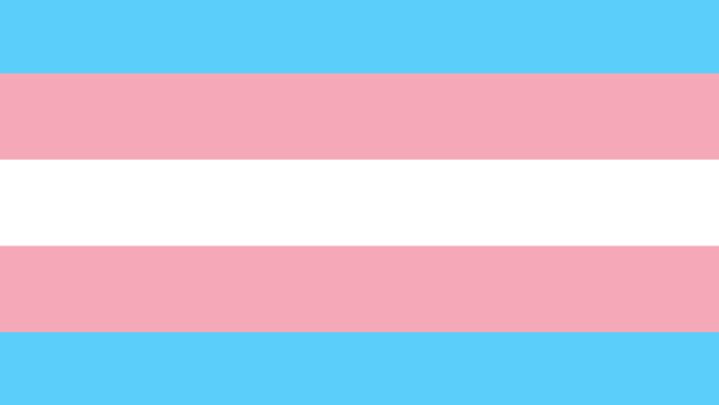
The Albertan United Conservative Party (UCP) Government in Canada introduced three bills
directly targeting transgender youth in Alberta’s legislature on 31 October 2024. The Lemkin
Institute condemns these bills as genocidal in nature and supports the legal challenges already
planned by Egale and Skipping Stone Foundation, two Canadian organizations which advocate
for 2SLGBTQ+ rights and freedoms. The Assembly of First Nations 2SLGBTQQIA+ Council has
also released a statement opposing the bills. Alberta’s proposed legislation is a threat to the
identities, lives, and wellbeing of all trans individuals living within Alberta, especially young ones.
The three pieces of legislation are aimed at controlling different aspects of trans peoples’ lives
and erasing them from a variety of public spaces. The Health Statutes Amendment Act, 2024 is
designed to prevent trans individuals from accessing necessary health care. It bans the
prescription of hormone therapies or puberty blockers to minors—but only when administered
as gender-affirming care. When needed for other medical conditions, the bill allows their use.
Although the Act itself sets out which drugs are banned, it also grants the Minister of Health
unfettered discretion to ban any drugs they wish.
The bill further bans certain medical procedures on minors, but again only when administered
as gender-affirming care. Gender-affirming surgery is already unavailable for minors in Canada.
The inclusion of these amendments in this bill are clear examples of fear mongering. Provincial
Premier Danielle Smith wants Albertans to think that children who identify as trans
are having genital reconstructive surgery. This simply isn’t happening.
The second bill, the Education Amendment Act, 2024 aims to erase trans youth from schools or
endanger trans youth living in unsupportive homes, preventing them from accessing support of
any kind by increasing governmental and parental interference and surveillance in schools. It
subjects teaching resources that mention gender and sexuality to Ministerial overview. For all students, it requires schools to notify parents of any request to be referred to by a new name or
pronoun. For those 15 and under, the bill prevents teachers from using a preferred name or
pronoun for a student without parental consent. The bill itself acknowledges that notifying the
parent of such information could cause “emotional or psychological harm” to trans youth. It thus
requires that “counselling or other assistance” be provided before the parents are notified. It is
silent on the question of physical harm or endangerment posed to a child whose parents and
guardians are hostile to their identity. The bill also subjects sex education to parental approval.
Lastly, the Fairness and Safety in Sport Act has as its goal the erasure of trans women and girls
from sports. It prevents women and girls who were not assigned female at birth from
participating in sports both in the education system and at the provincial level. The Minister of
Tourism and Sport was unable to respond to questions about how necessary this legislation
actually is, as the Albertan government apparently has no idea how many trans women and girls
actually participate in sports in the province.
Overall, we get the impression that the Albertan government is having a hard time
understanding demographics. It has crafted three pieces of legislation designed to make life
harder for a whopping 0.37% of its population. Whatever threat Premier Smith is worried about
from the trans community, this response seems disproportionate and wasteful in addition to
bigoted, mean-spirited and harmful, given how much red tape it will create.
In consulting stakeholders to craft the bills, the Albertan government appears once again to
have gotten confused about population proportions. Instead of consulting groups representing
the 2SLGBTQ+ community (or the trans community in particular), Premier Smith turned toward
a fringe minority ‒ “detransitioners” ‒ to craft its policy. Studies show that regret for transitioning
occurs in around 1% of cases where trans individuals had gender affirming surgery. Instead of
consulting the 0.37% of trans people in Alberta, Premier Smith mistakenly consulted the 1% of
that 0.37% who had undergone gender affirming surgery as the proper group of stakeholders to
consult—a tiny number not remotely representative of trans people. In defense of these bills
Premier Smith said “doctors aren’t always right,” likening gender- and life-affirming care to the
predatory opioid crisis. In response we remind her that Premiers aren’t always right either.
Alberta’s bills are the follow-up to similar legislation which received royal assent in
Saskatchewan last year. That legislation only focused on subjecting pronoun and name
changes at schools to parental approval. The Lemkin Institute finds the global rise in legislation
targeting the trans community to be profoundly worrisome. Policies crafted to erase the
existence of a small, marginalized group or to make their lives more difficult, especially in ways
which are proven to increase suicide and incidents of hate crimes perpetuated against them, are
genocidal in nature in that they target a very specific identity group for eradication.
These anti-trans policies are new manifestations of the recent upwards trend of the use of the
“notwithstanding clause” by Canadian provincial governments. This clause, famously detested
by Prime Minister Pierre Trudeau, allows Canadian governments to pass legislation that violates
many of the rights and freedoms guaranteed by the Charter of Rights and Freedoms. Such
legislation must be renewed every five years pursuant to the self-contained sunset clause of
section 33. The federal government has never invoked this clause. Until about five years ago, it
was virtually never used. The recent worldwide rise in political extremism and faux populism
has resulted in what could become a golden era for use of the notwithstanding clause, and has
at the same time sparked a backlash against the existence of the clause across the country.
The rights and freedoms subject to the notwithstanding clause include the equality guarantee,
fundamental freedoms, and legal rights. Court challenges which determine that Alberta’s
anti-trans bills are discriminatory or infringe the right to life or the right to be free from cruel and
unusual punishments can therefore not invalidate the legislation. Those challenging this
legislation – and other legislation adopted in derogation of Charter rights – must therefore be
more creative in their approach. For example, just this year, the English Montreal School Board
appealed to the Supreme Court of Canada (SCC) a Quebec Court of Appeal (QCCA) decision
which found that Quebec’s Bill 21 was mostly valid. One argument which was rejected by the
QCCA was that Bill 21 was unconstitutional because it was contrary to the unwritten principles
of the Constitution and the fundamental constitutional architecture. If a law is found to violate
those norms or the fundamental architecture, it cannot be saved by section 33. As former Chief
Justice of the SCC Beverley McLachlin once said, genocidal laws would clearly violate unwritten
constitutional principles.
Alberta is well aware that its policies will cause harm to trans individuals, especially trans youth,
as evidenced by its explicit mention of such risks in the Education Amendment Act, 2024. We
find the offer of counselling prior to the unnecessary exposure to parents and the consequent
risk of abuse to be insulting and cynical. Premier Smith has positioned these policies as a win
for “parental rights.” The Lemkin Institute for Genocide Prevention would add a caveat: These
policies are a win for the rights of abusive parents. Parents who have their children’s best
interests in mind do not want their children to choose between being forcefully outed or
remaining in the closet. Weaponizing the abusers of a marginalized, vulnerable group through aw is a clear manifestation of genocidal intent: It justifies, normalizes, and legalizes hostility for
an identity group, empowering family members to use coercion against other, less powerful,
family members, thereby encouraging the destruction of a young trans person both at home and
in public. The UCP would like to see trans youth disappear — either by becoming invisible,
committing suicide, or being exposed to parental or guardian abuse.
Premier Smith is guilty of strawmanning by banning specific gender affirming surgeries for youth
which are already unavailable for youth. This, along with the law intended to erase trans women
from sports without any prior study into their presence in Alberta sports, demonstrates that
these policies are crafted with a single intention in mind: to exaggerate the presence of and
threat posed by an already marginalized group and then to erase their existence. This is
genocidal intent in action. The Lemkin Institute for Genocide Prevention and Human Security
opposes it and stands in solidarity with its targets. We warn all Canadians that genocidal jaws
rarely remain tethered to the initial target group — they tend to expand like a fungus to engulf
ever-growing numbers of unwanted peoples. Genocidal anti-trans laws are just the beginning of
a greater assault on the rule of law as such and on the value of individual life, whether trans or
not.